
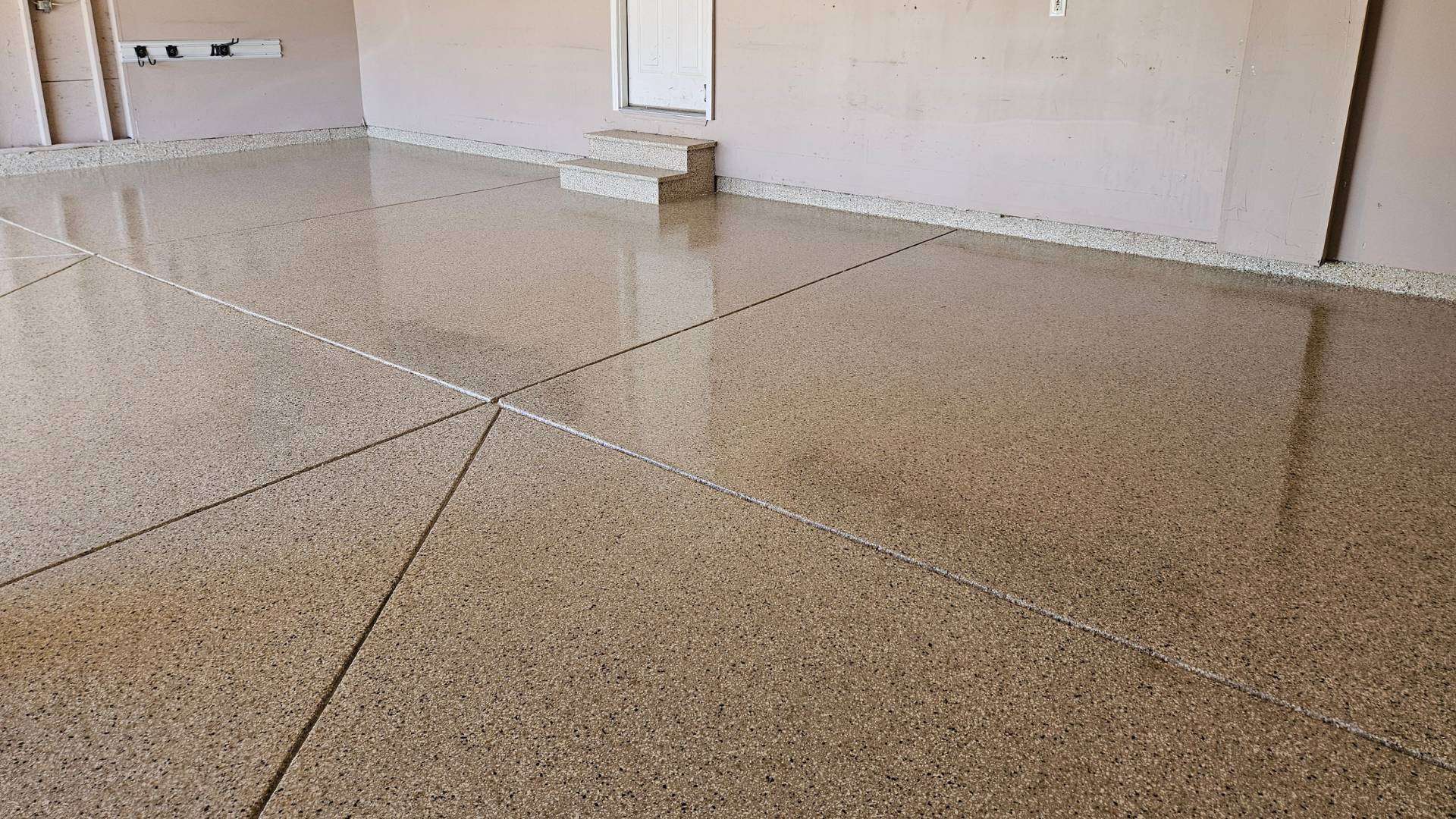
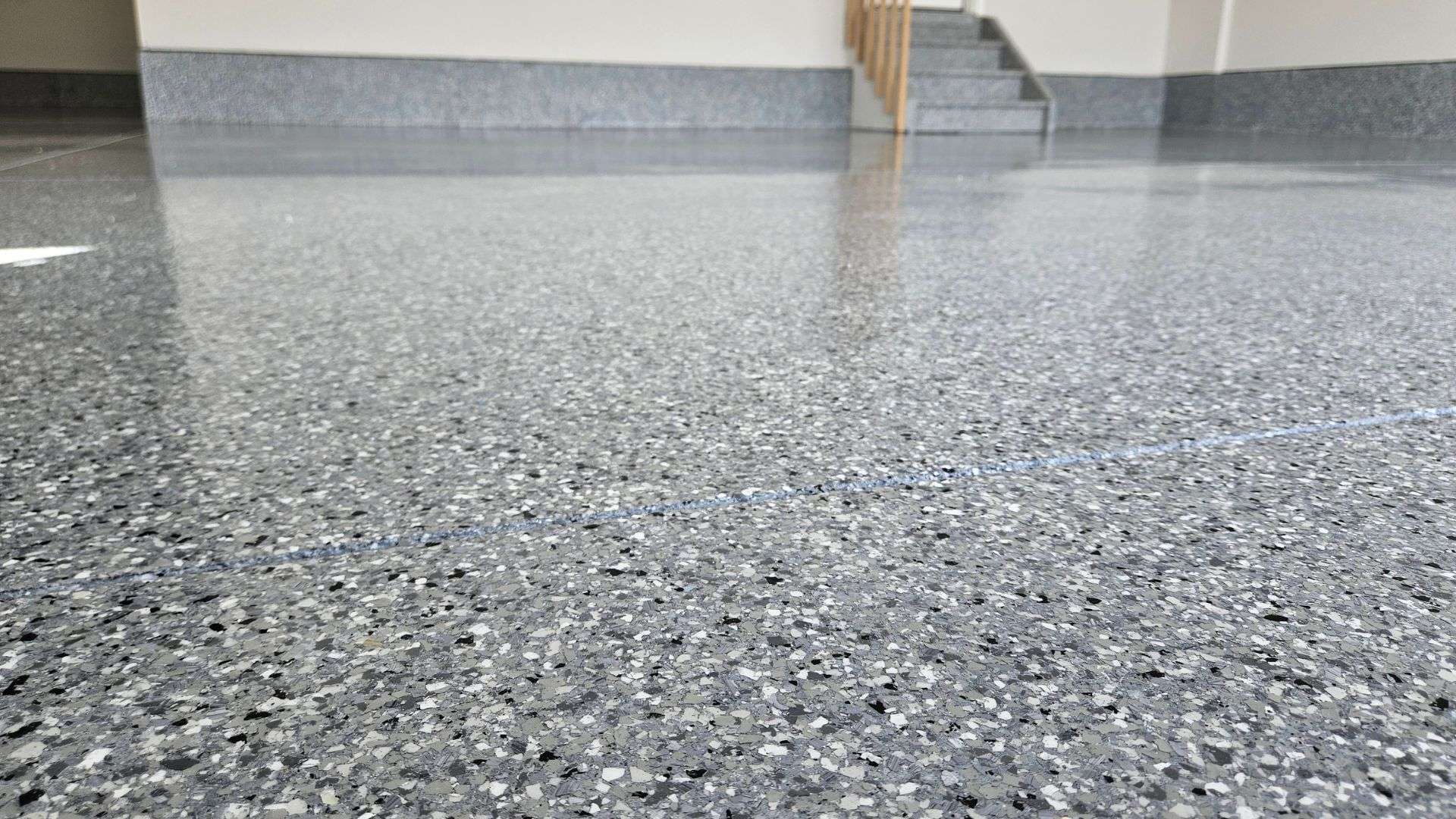
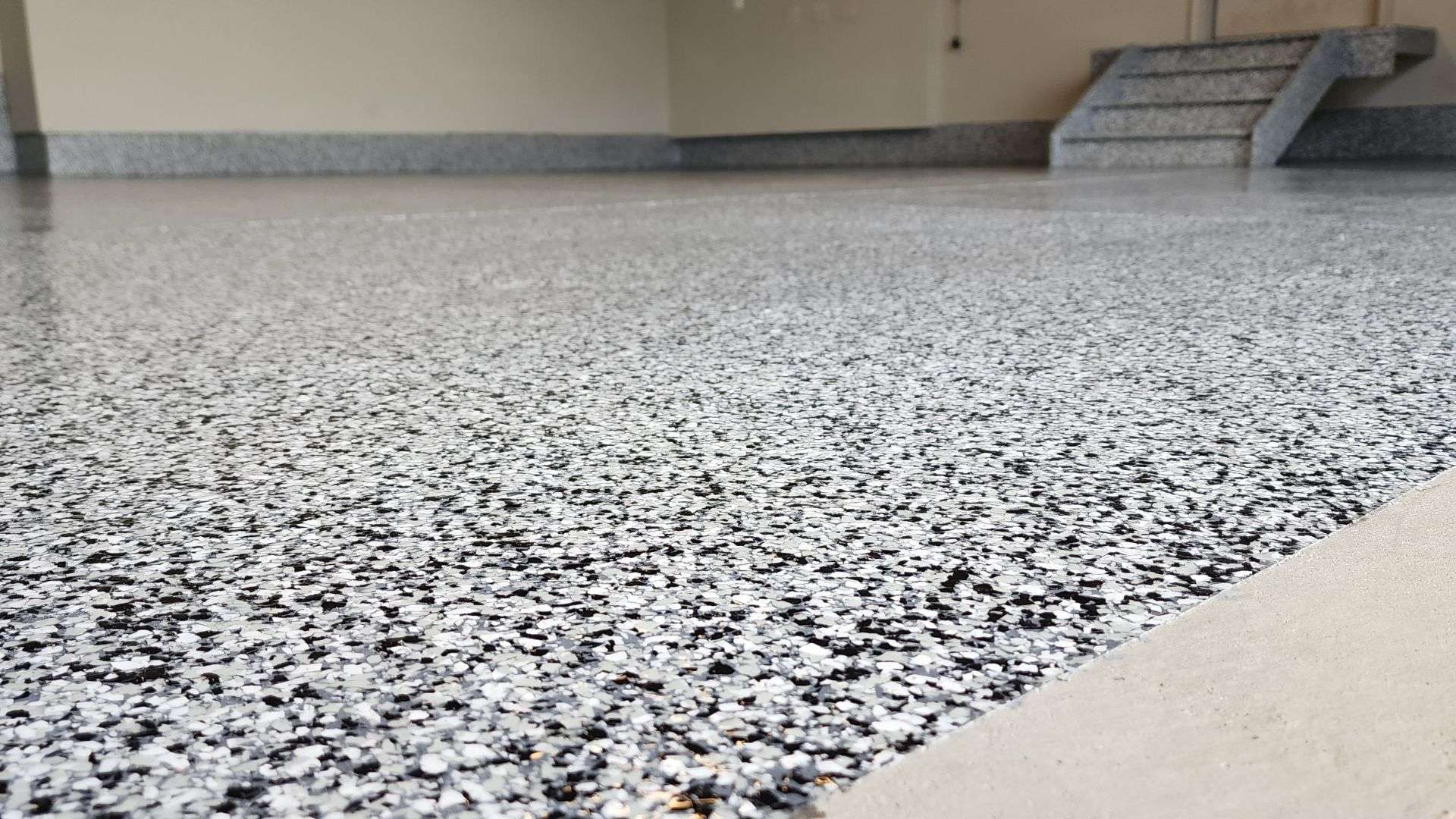
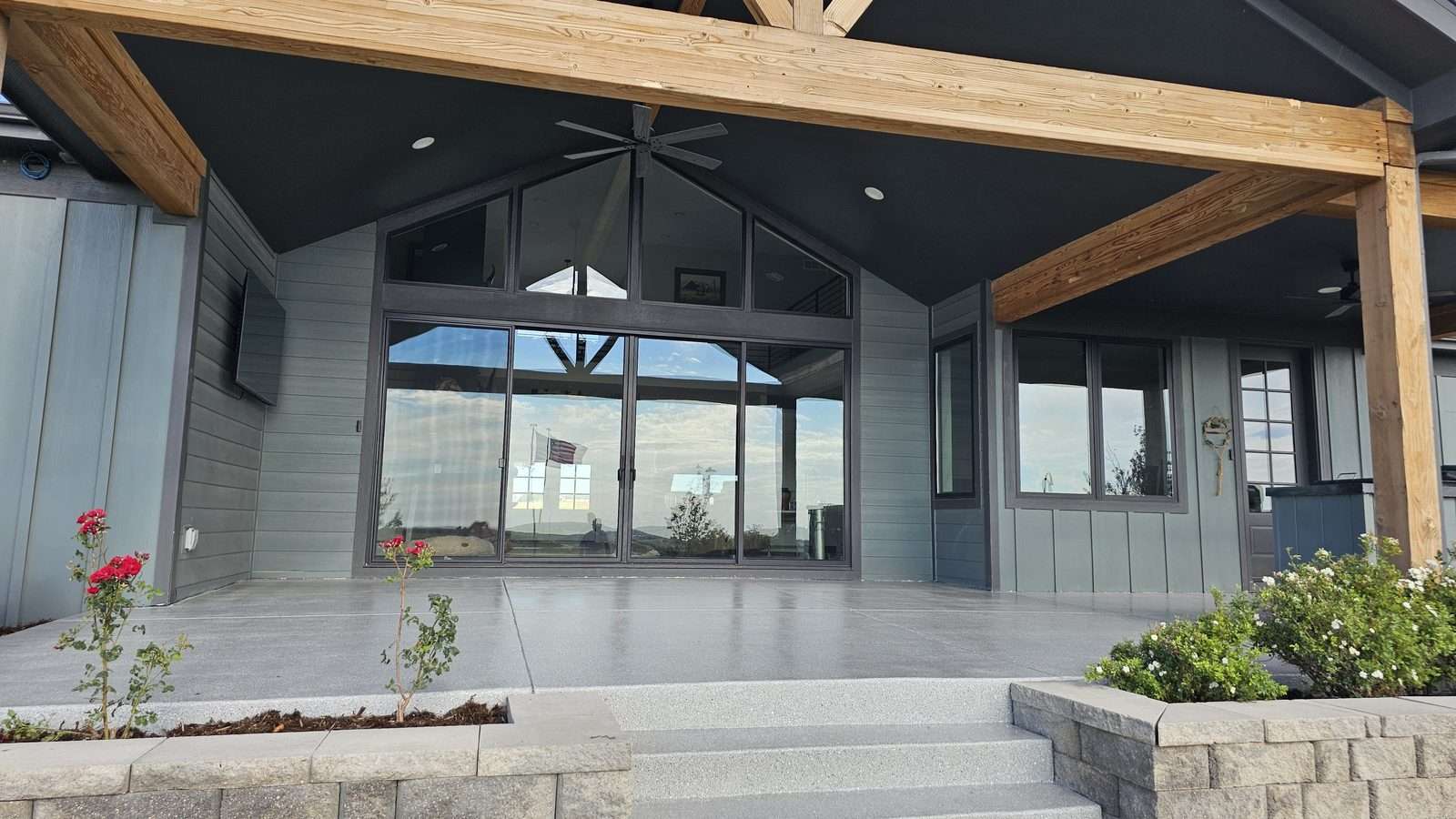
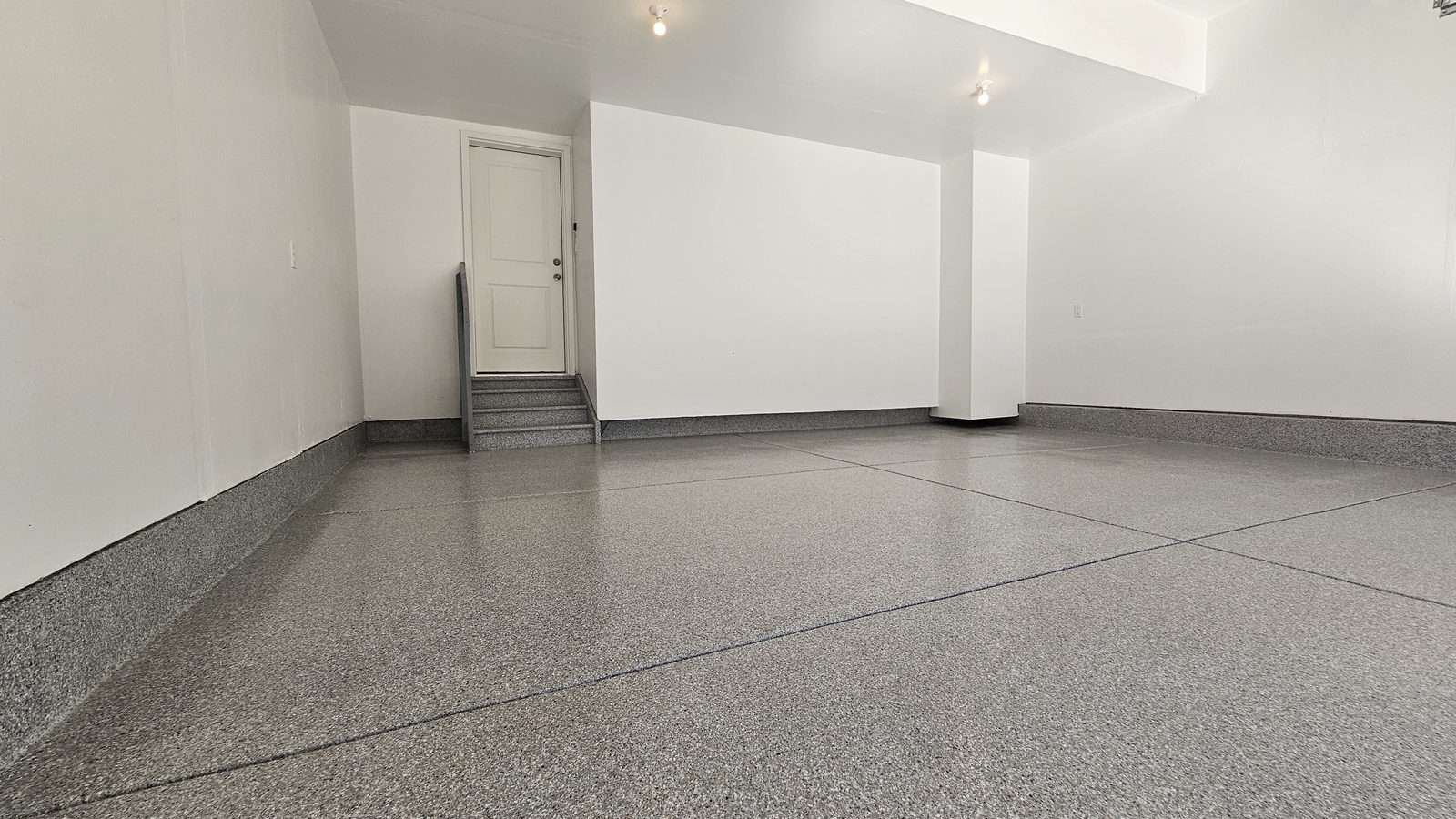
EvrStep Epoxy Coatings installs garage floor coatings and concrete floor coatings in Parker, engineered to withstand Front Range freeze-thaw cycles and road salt exposure. Our diamond-ground surface prep and UV-stable polyaspartic topcoats deliver long-term protection for Colorado homeowners who demand durability and clean aesthetics.
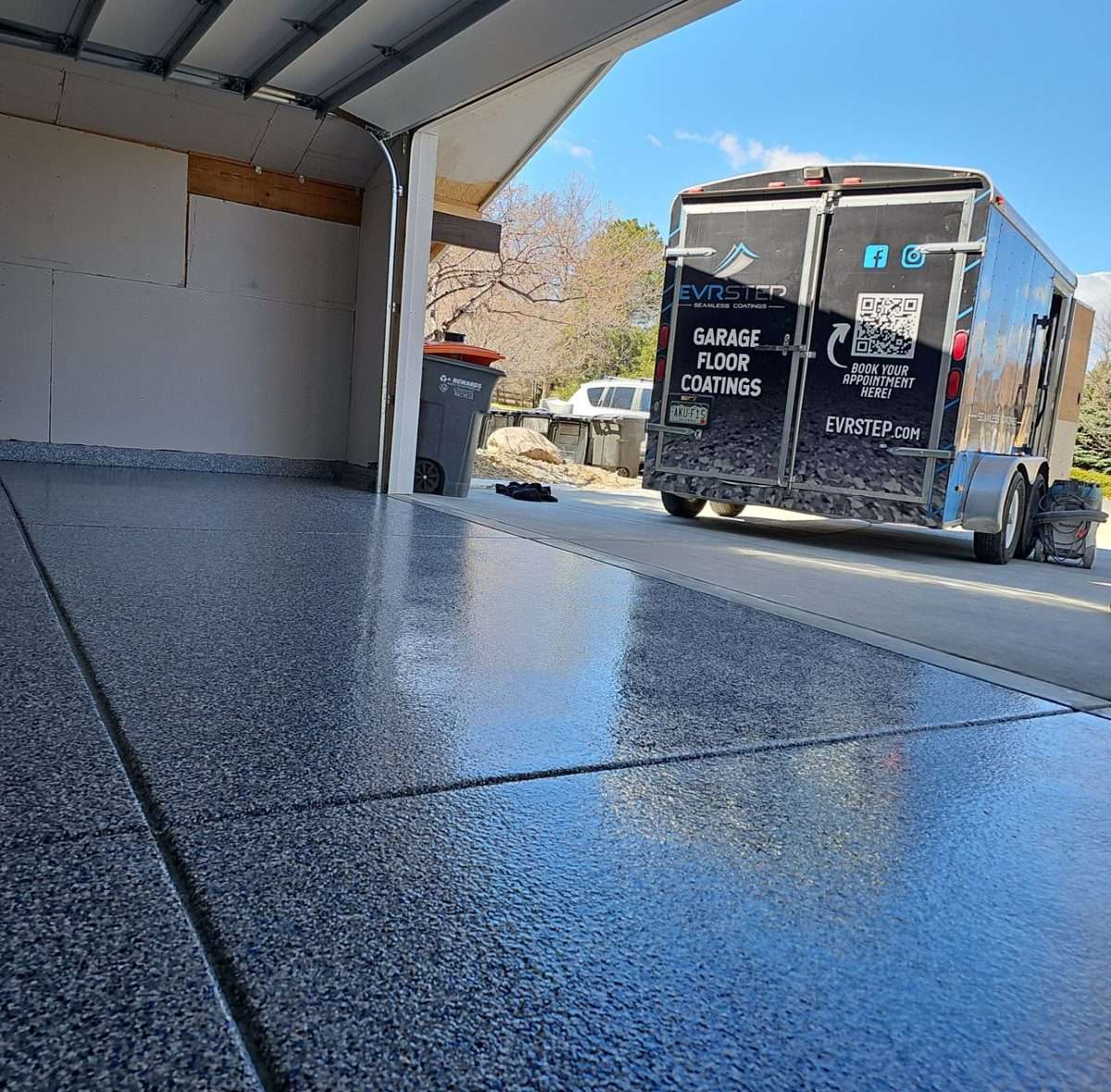
A 21-year delamination warranty backed by ICRI CSP-2 mechanical prep separates contractors who understand substrate science from those who skip it. EvrStep Epoxy Coatings holds BBB A+ standing and delivers Parker garage floor coatings with documented surface preparation standards that address Colorado’s freeze-thaw and altitude conditions.
For Diane, we installed a full-broadcast flake system in her Parker garage after confirming RH readings below 75% per ASTM F2170. Clarence’s floor in Centennial required crack routing and an epoxy gel fill before the polyaspartic topcoat went down. Coatings fail when moisture testing gets skipped or when contractors grind to visual appearance instead of a measured CSP target.
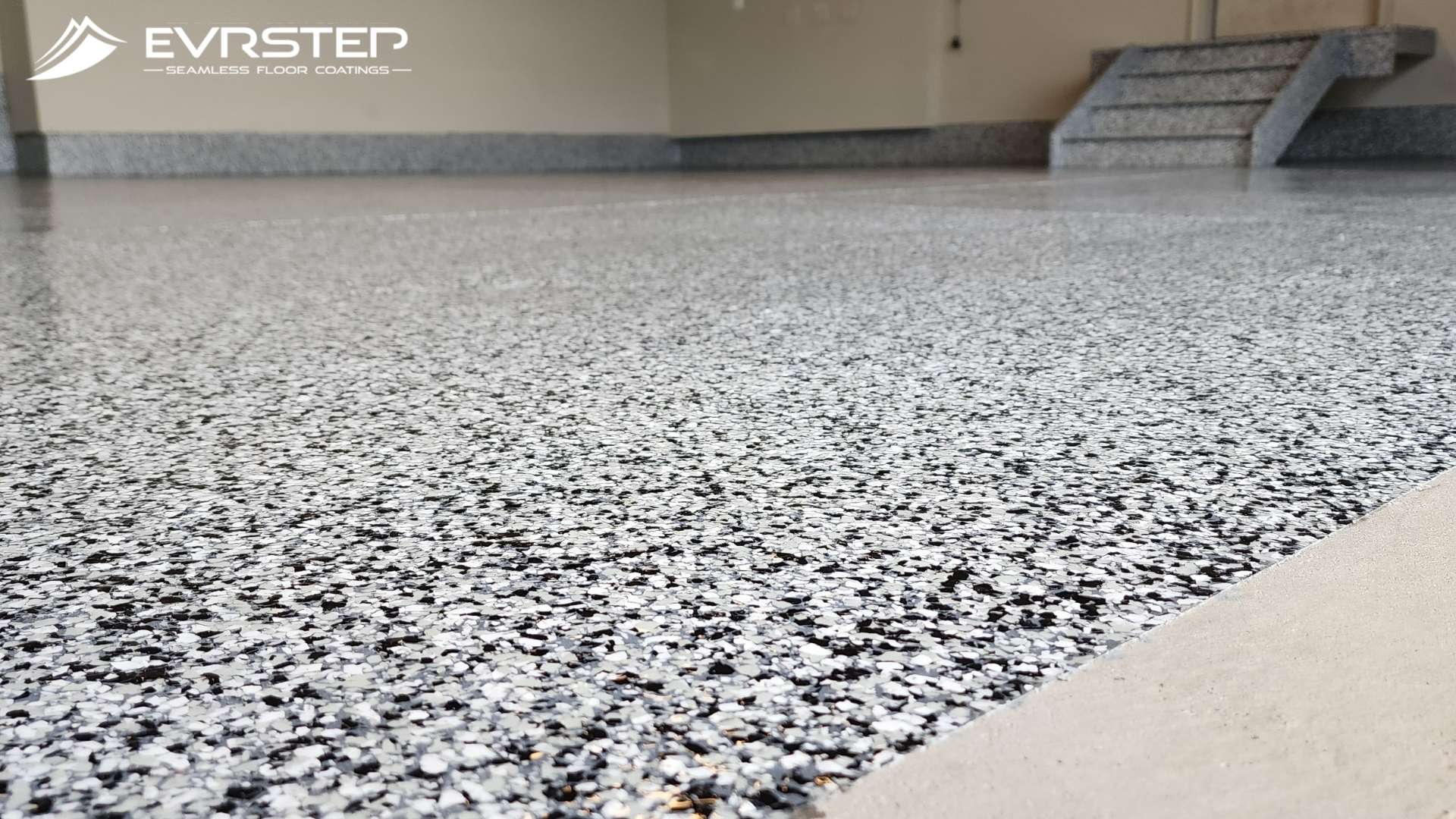
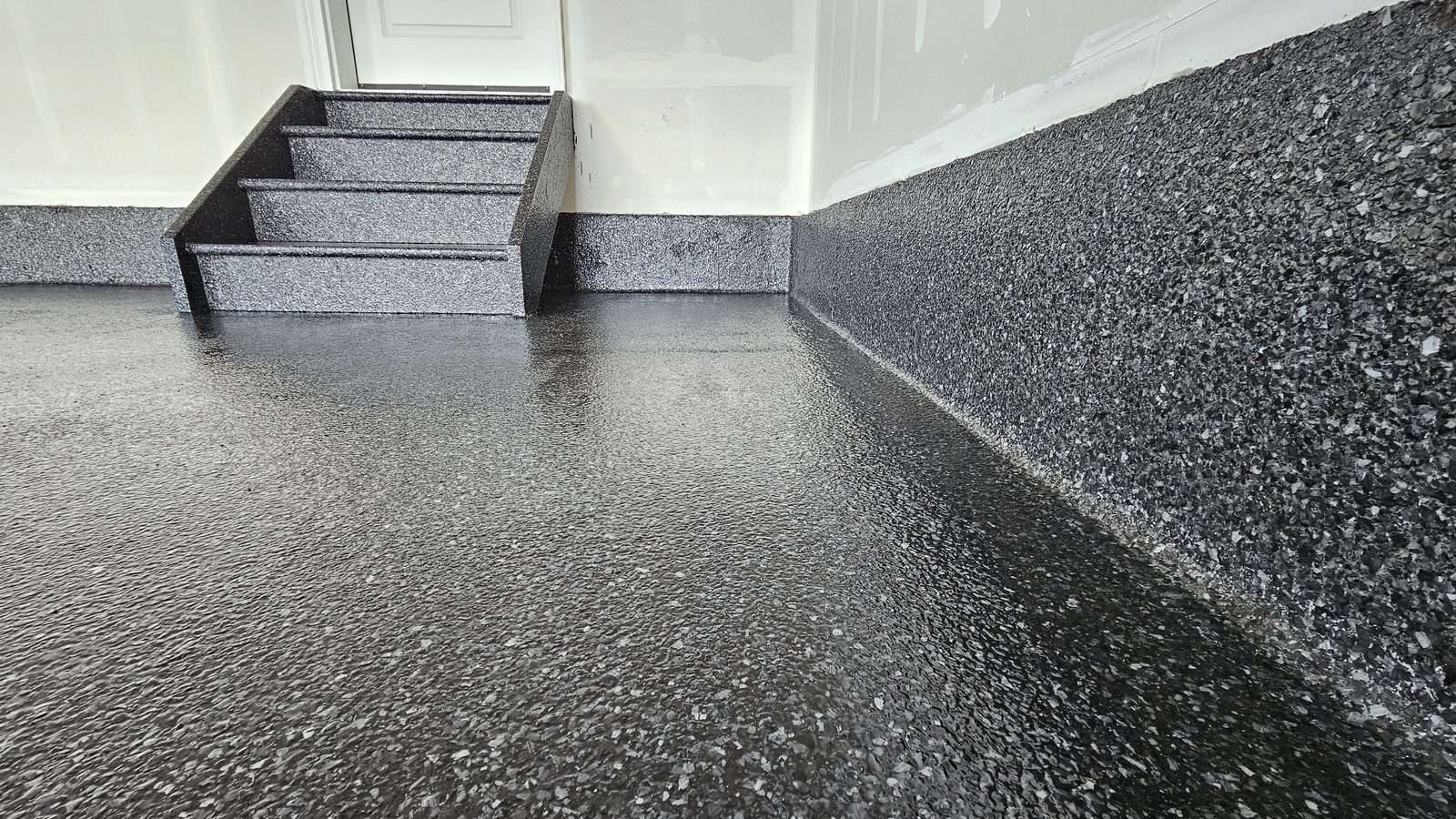
We install polyaspartic and epoxy resin system garage floors that resist hot-tire pickup, road salts, and staining through diamond-ground concrete surface preparation and UV-stable topcoats.
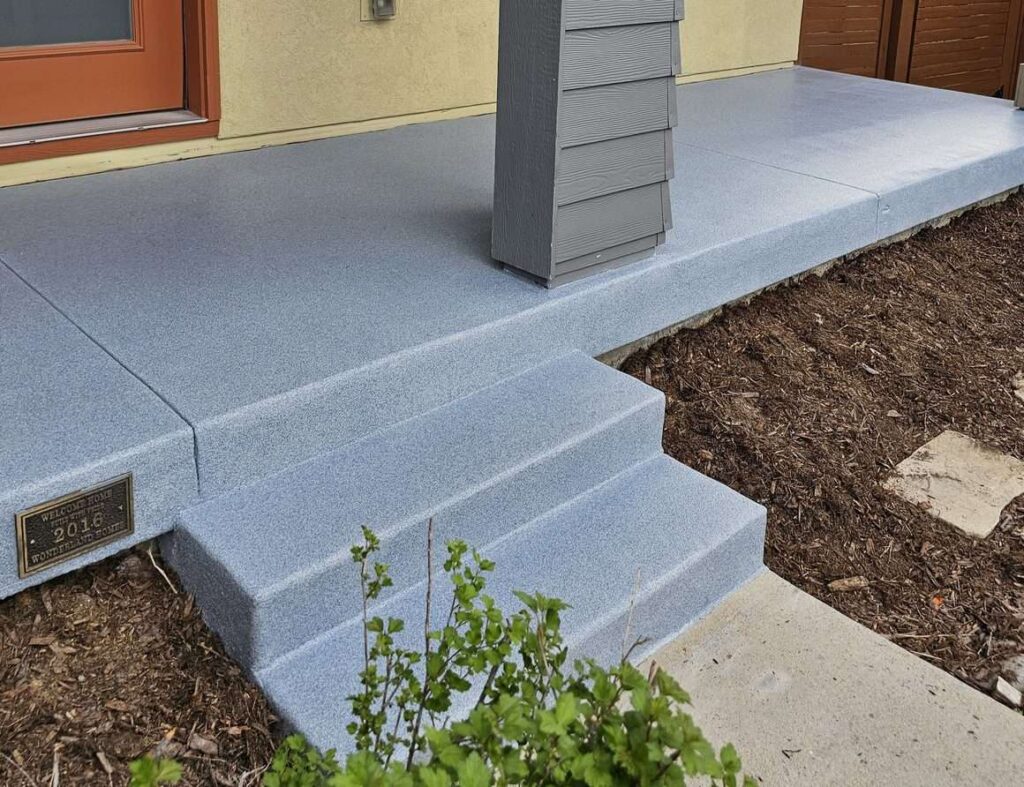
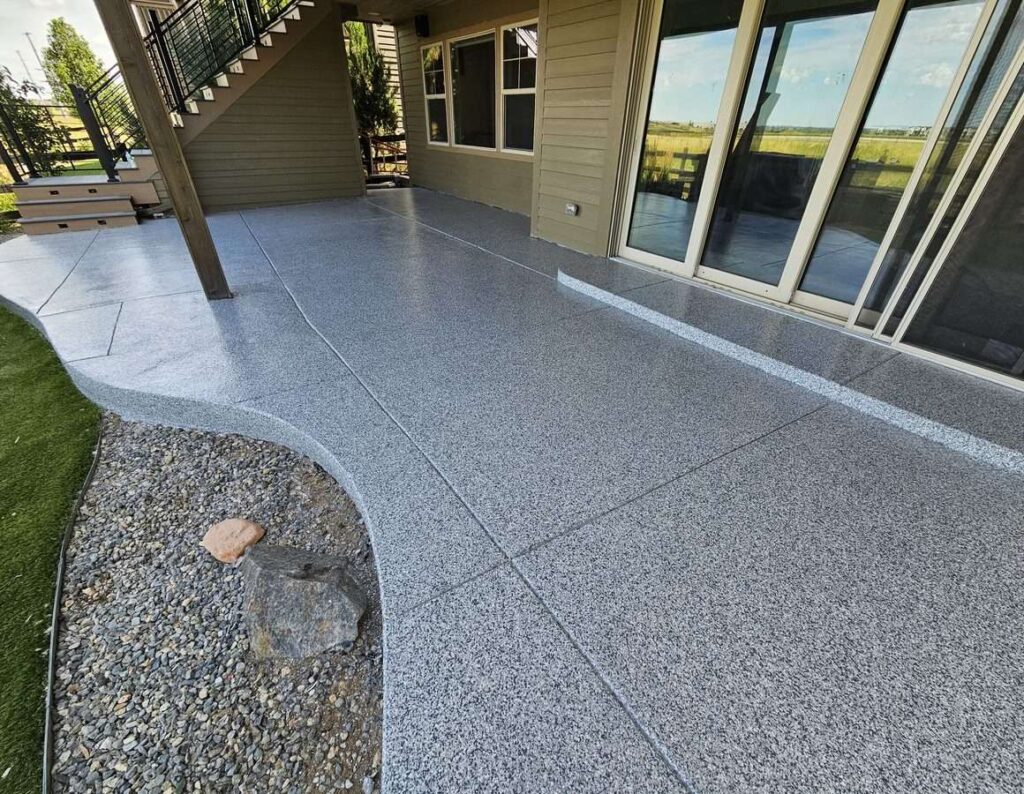
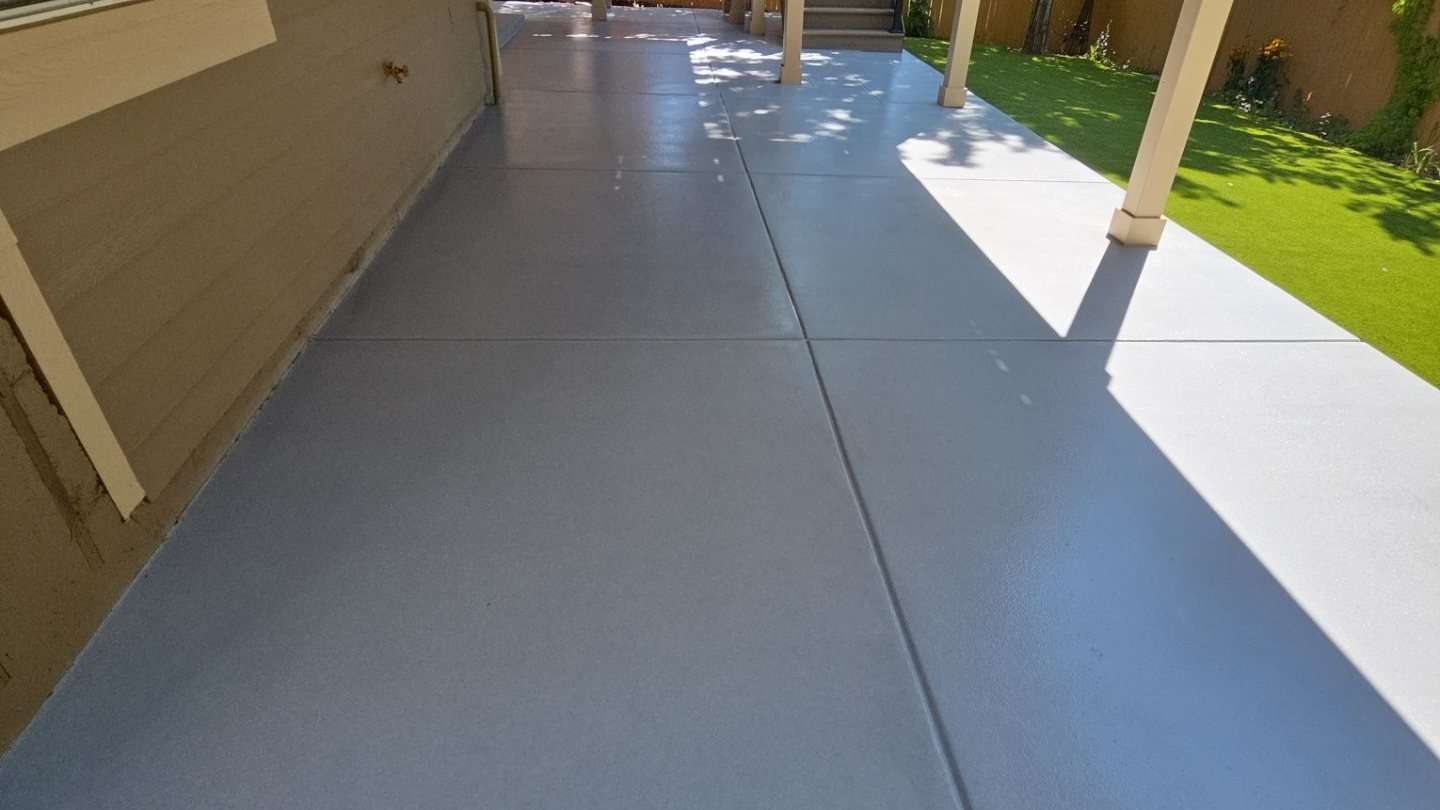
Our trained crews apply freeze-thaw-resistant concrete floor coatings to patios and walkways using slip-resistant texture aggregates and climate-adapted resin formulations for Parker conditions.
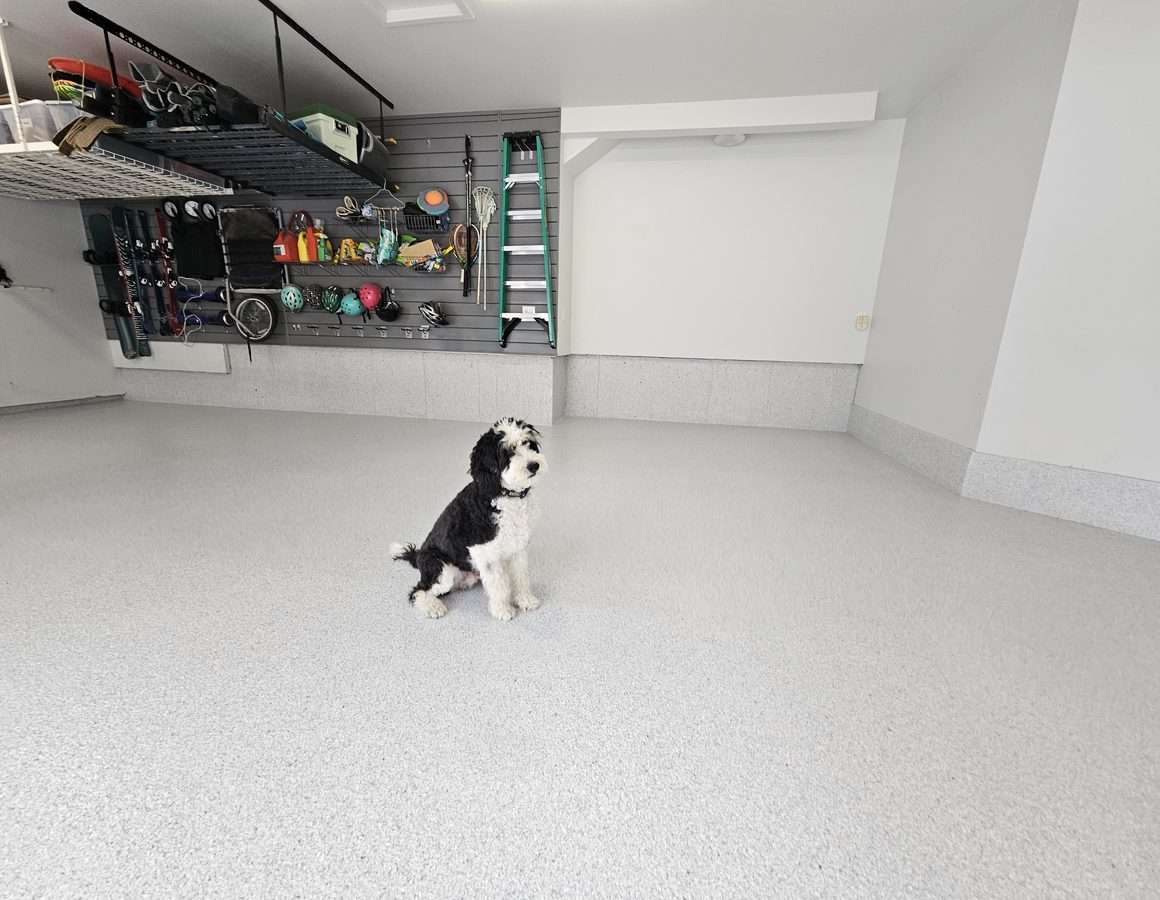
We deliver high-traffic concrete floor coatings for retail and light-industrial spaces using broadcast quartz systems and fast-cure polyaspartic builds that minimize downtime.
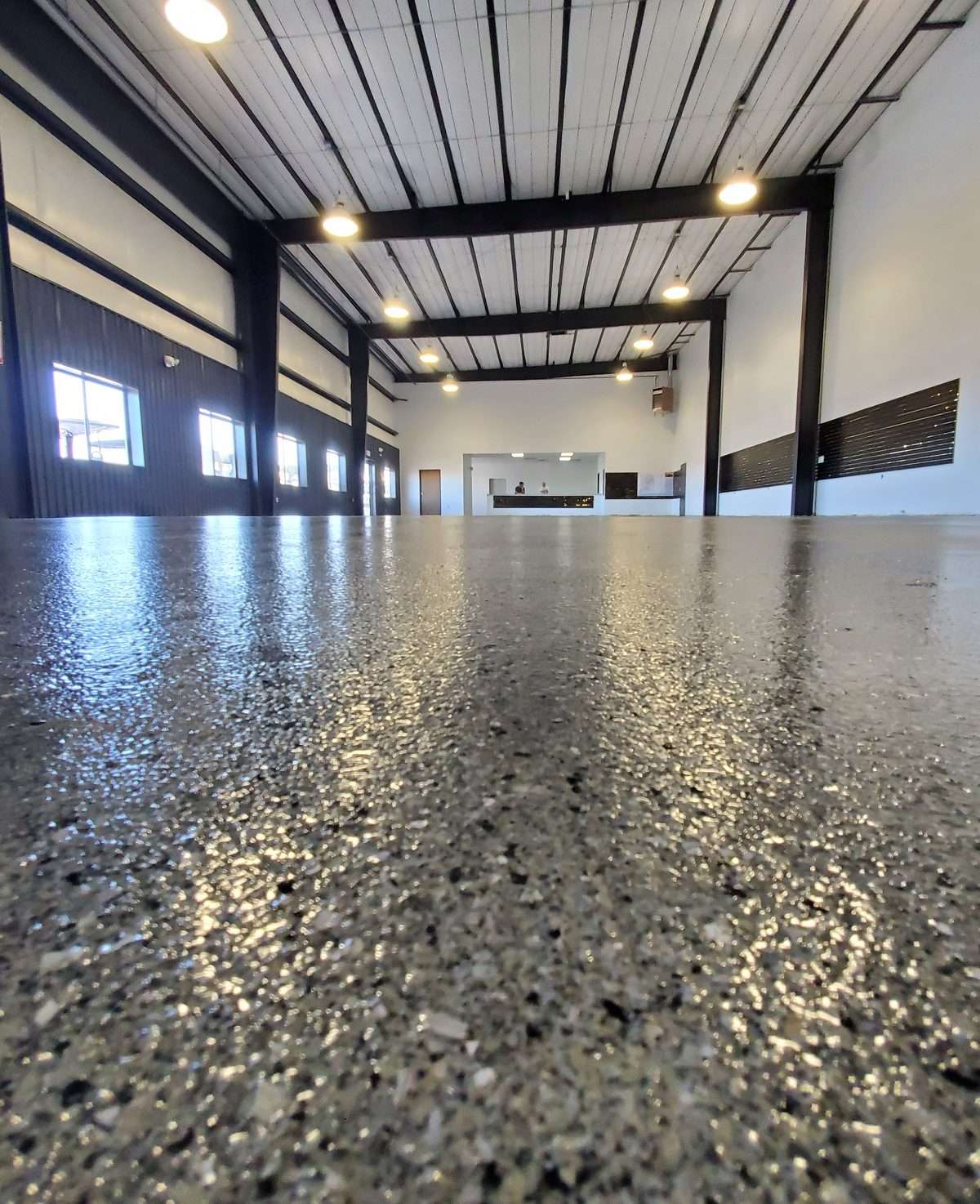
Before committing to an epoxy coating, one thing is worth saying plainly: epoxy coatings and polished concrete address fundamentally different substrate conditions, and choosing the wrong one means watching the application fail within two years. At $7 to $15 per square foot for epoxy-polyaspartic builds in Parker, the decision , not because of the upfront cost, but because the replacement cycle starts over if the substrate was misread.
The callback rate on Parker garage floors splits cleanly at one variable: whether the installer tested the slab for porosity and existing sealers before specifying the build. Everything else (flake color, gloss level, cure speed) is secondary to that single diagnostic decision.
“EvrStep epoxied both of our garage floors. The finish is amazing!” — Jennifer McClearn
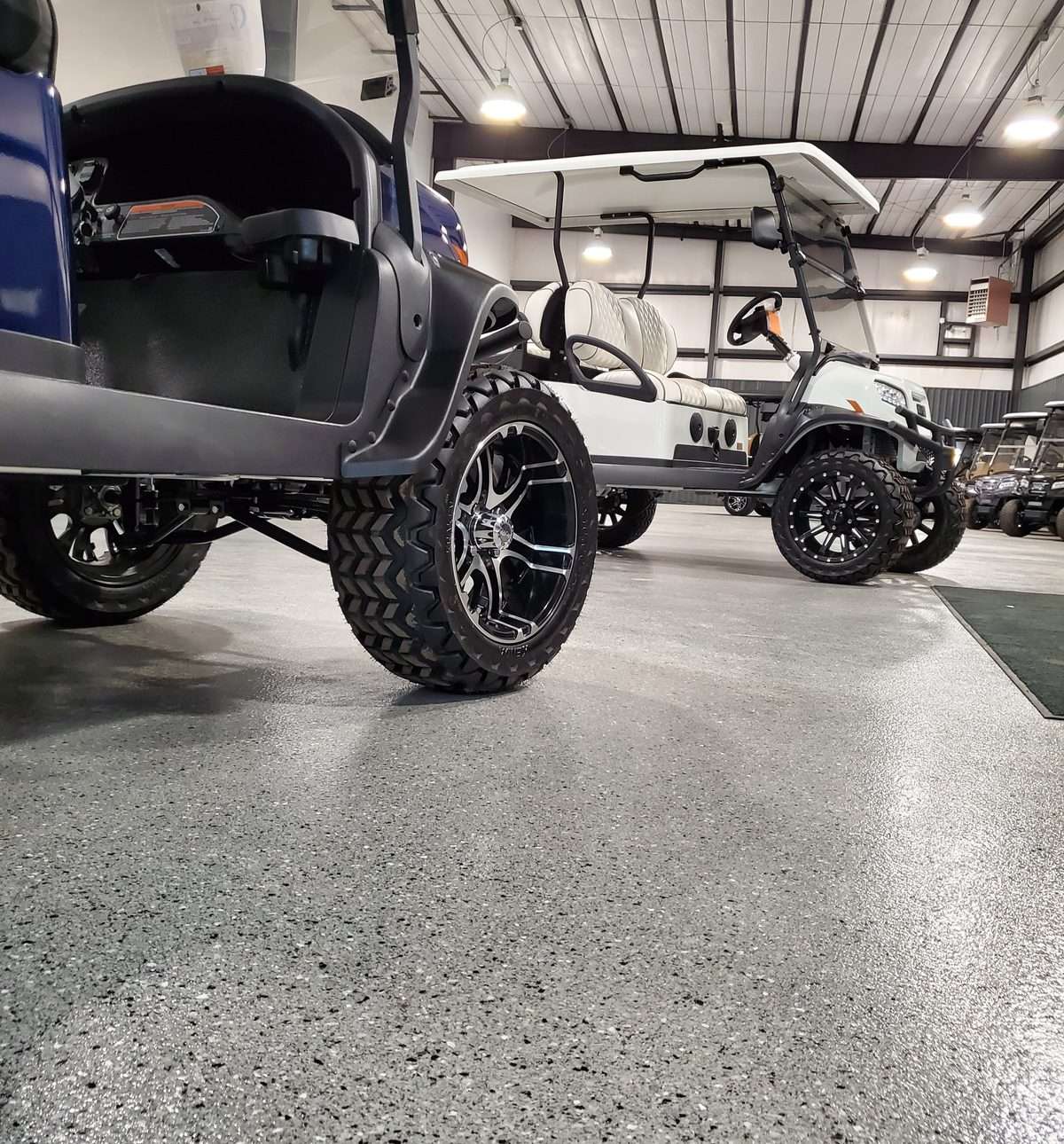
Substrate prep and vapor testing determine longevity more than topcoat brand. Skipping RH probes or grinding to insufficient profile creates delamination risk that surfaces months later, long after the application looks perfect.
EvrStep Epoxy Coatings serves homeowners and commercial property owners throughout Parker and surrounding Douglas County areas, delivering professional garage floor coatings and concrete finishing systems directly at customer properties. From Stonegate to Castle Rock, the team reaches Parker-area clients via I-25, E-470, and Parker Road, covering residential neighborhoods and light-commercial sites across the region. Most garage floor installations are completed within two to three days, including diamond grinding to CSP-2 and polyaspartic topcoat application that cures to vehicle traffic within 24 hours.
Service Area Coverage
Installation schedules account for Parker’s freeze-thaw cycles and altitude-driven cure variables, with morning starts preferred during summer months to control outgassing and substrate temperature before afternoon heat peaks.
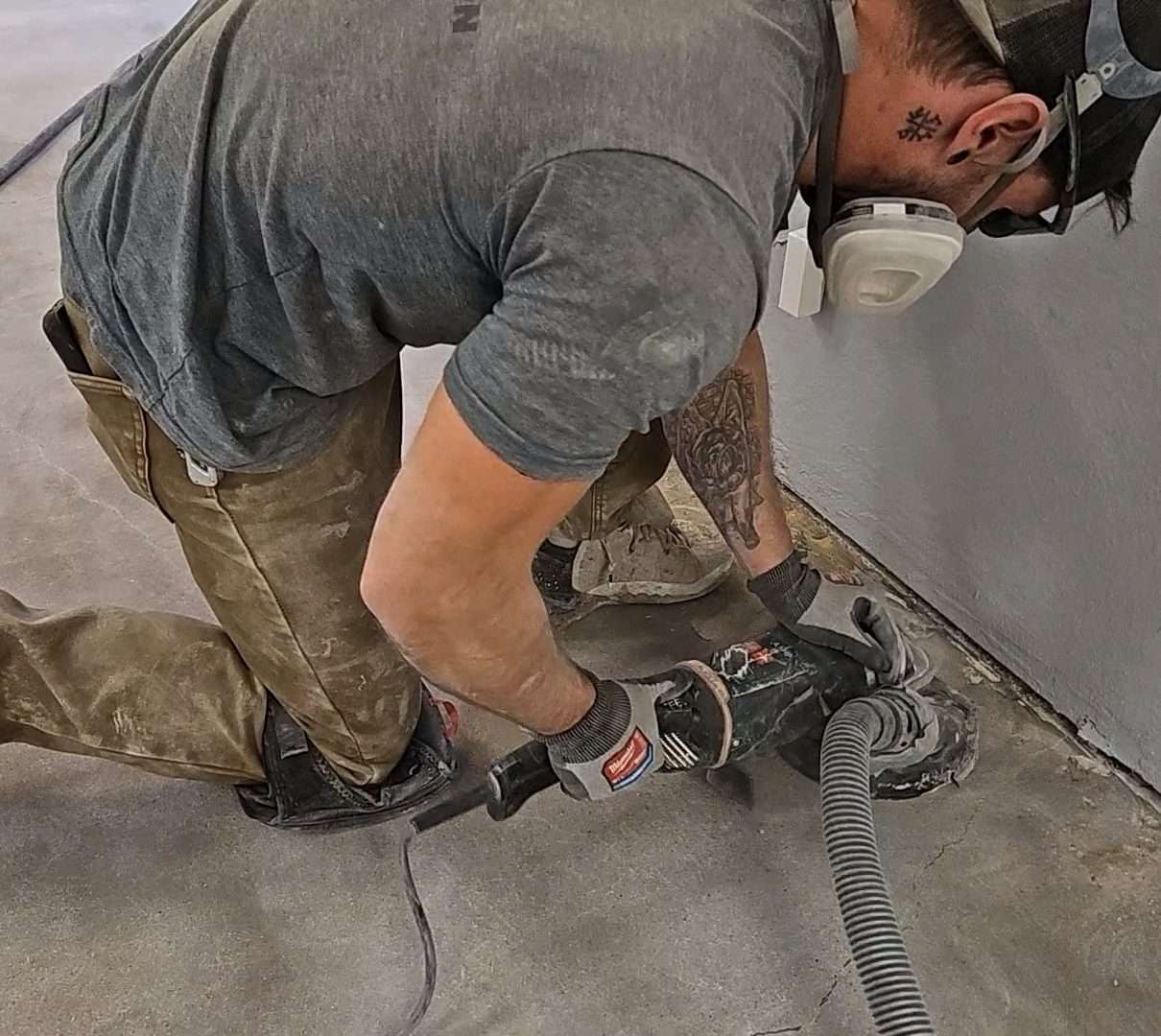
Coatings fail when prep shortcuts vapor testing and surface profiling. The substrate decides longevity, not the decorative layer most buyers focus on first.
Two quotes for the same garage floor can differ by thousands, and the price itself rarely explains why. What explains it is what each one includes. Start with the surface profile: an epoxy coating bonds mechanically rather than gluing itself down, so the grinding spec is the specification, and a bid that never names it is not comparable to one that does.
Ask whether slab moisture testing sits inside the price or waits as a change order. Relative humidity in the concrete decides whether a primer is required, and finding that out after the floor is down is the expensive order to do things in. Ask for the total build in mils, and ask what the topcoat resin is, because an epoxy coating finished with an aromatic topcoat behaves nothing like one finished with an aliphatic topcoat under Colorado sun.
Then the quiet question: who is actually doing the prep? Grinding is the step that gets subcontracted, rushed, or quietly trimmed, and it decides whether an epoxy coating is still bonded in five years. We would rather walk through a quote you got somewhere else than have you choose on price alone and call us to redo it.
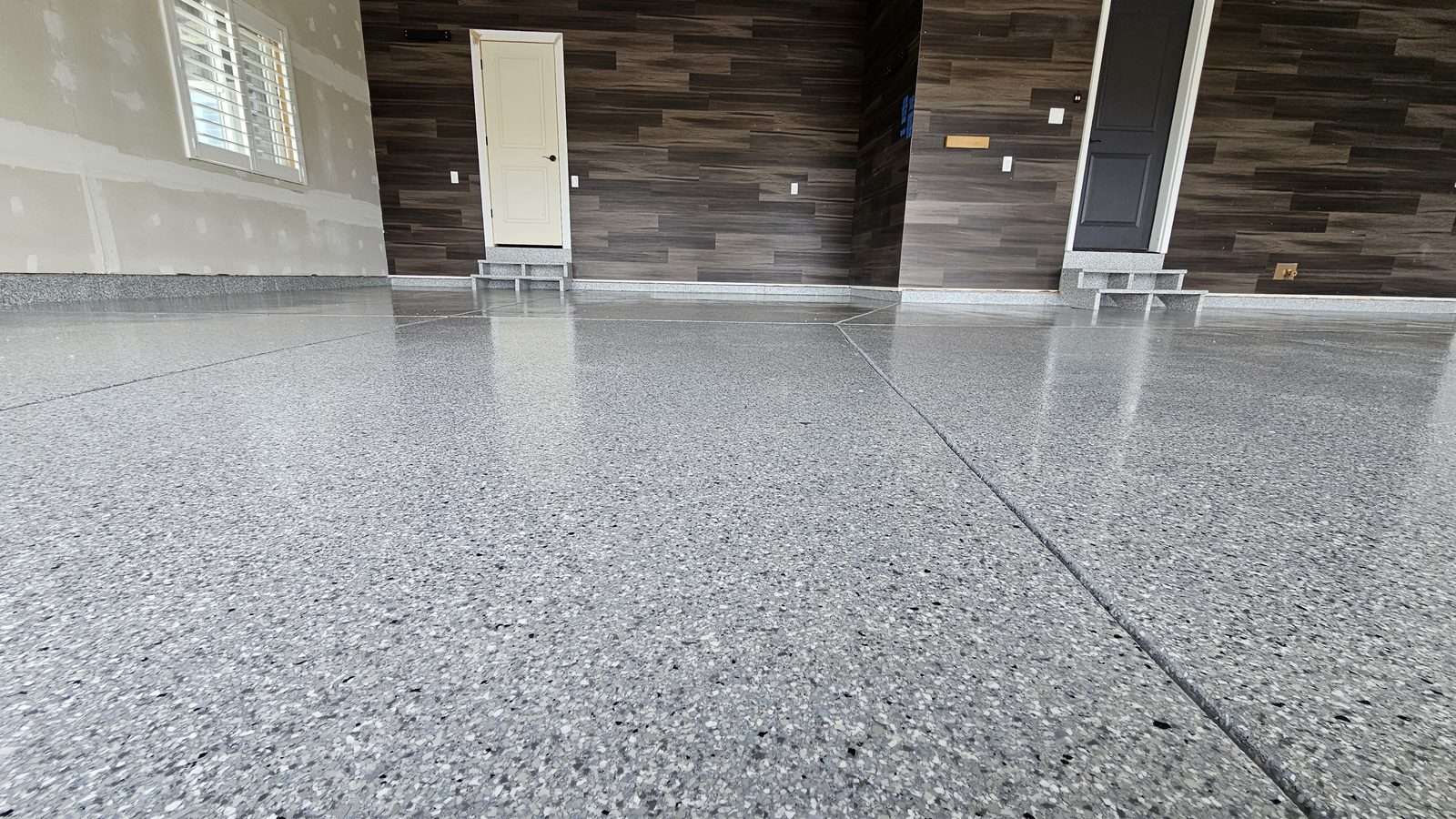
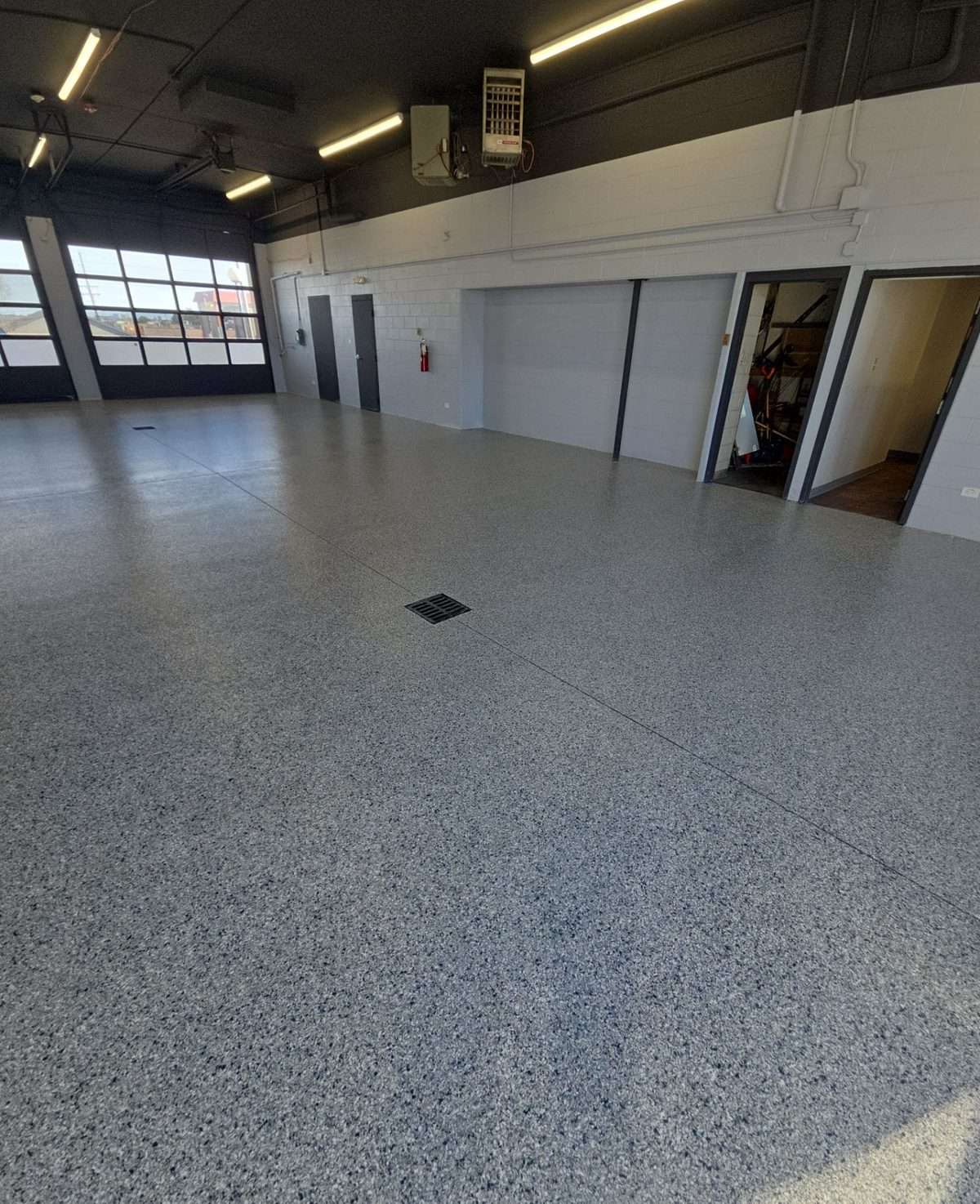
We talk people out of work sometimes, and it is worth knowing when. If a slab is driving moisture upward, an epoxy coating placed over it can lose adhesion no matter how careful the preparation was, so the moisture gets addressed first or the floor gets a different system. If a room cannot be out of service long enough to cure, a fast-return polyaspartic build fits where a standard epoxy coating does not.
If what the space actually wants is a hard, sealed, lower-sheen surface rather than a film sitting on top of one, grind and seal or polished concrete usually costs less and wears differently. And if the concrete below is cracked or settling, concrete repair comes first, because any coating takes the shape of whatever is underneath it.
None of this argues against an epoxy coating. It argues for diagnosing before specifying. The floors that disappoint people are almost always the ones where the system got chosen before anyone looked closely at the slab, and working that out with you is a conversation rather than an upsell.
Untested slabs can harbor vapor pressure that lifts coatings within months, even when the surface appears dry. ASTM F2170 relative humidity probes reveal subsurface conditions visual inspection cannot detect.
The slab looks ready. It feels dry. Then eighteen months later, the coating bubbles. Vapor pressure builds beneath the film, and no amount of surface cleaning prevents it. ASTM F2170 probes measure what you cannot see. Contractors who test before application catch the slabs that will fail. Contractors who skip it rely on luck.
Topcoat chemistry determines color stability. Aliphatic polyaspartic formulations resist UV degradation under Colorado’s high-altitude sun, while aromatic alternatives amber quickly when exposed to ultraviolet radiation over time.
Ultraviolet exposure at Parker’s elevation breaks down aromatic resin chains faster than most property owners expect. The garage door opens. Sunlight floods the slab. Within eighteen months, the floor that looked glass-clear during installation carries a yellow cast that deepens every summer. Aliphatic topcoats cost more per gallon, but the molecular structure resists photodegradation in ways aromatic chemistry cannot replicate. Contractors who skip the UV-stable layer save on material expense while transferring the cosmetic failure to the homeowner. The slab underneath remains protected, but the visual outcome tells a different story than the one promised during the estimate.
Colorado’s altitude amplifies ultraviolet intensity compared to sea-level markets. A topcoat formulation that holds up in Houston may fail visibly in Parker within the same warranty window, and the difference traces directly to resin selection rather than application skill.
EvrStep Epoxy Coatings pairs a base epoxy layer with a UV-stable polyaspartic topcoat to deliver chemical resistance and gloss retention. The combination addresses both structural protection and aesthetic durability under Colorado sun exposure.
A garage floor that resists hot tire pickup but yellows within three years solves half the problem. EvrStep Epoxy Coatings builds Parker systems in two distinct layers: a pigmented epoxy base that bonds to the prepared concrete and handles impact, and an aliphatic polyaspartic topcoat that blocks UV degradation. The base layer does the structural work. The topcoat preserves the appearance. Skipping either one leaves a gap that shows up later.
Homeowners who ask for a single-coat solution often discover the limitation after installation. EvrStep Epoxy Coatings explains the layer separation during the estimate so Parker clients understand what each component contributes. The garage that looks sharp in year five started with a system designed for both protection and appearance from the beginning.
EvrStep Epoxy Coatings runs substrate profiling and porosity tests to determine which system bonds properly. The slab’s existing condition dictates the approach, not customer preference alone.
EvrStep Epoxy Coatings starts with a substrate assessment before recommending any system. A slab with high porosity and surface damage typically requires epoxy to build protective layers. Dense, structurally sound concrete benefits from polishing that exposes aggregate. The decision hinges on what the existing surface can support, not just aesthetic goals. Parker clients often assume both options work equally well, but adhesion chemistry tells a different story.
Winter failure stems from subsurface vapor pressure that was not tested before application. Coatings delaminate when internal humidity exceeds the bond strength, a condition invisible during warm-weather installation.
Concrete slabs breathe. In Parker’s freeze-thaw cycle, the slab pulls water from the soil below, then releases it as vapor when the garage warms. A coating applied without ASTM F2170 relative humidity testing traps that vapor beneath the film. Pressure builds. The bond fails. The coating lifts in sheets, usually starting near the perimeter where thermal cycling is most aggressive. Installers who skip the probe test during summer application miss the vapor load entirely, because warm concrete masks the problem until cold weather forces the slab into its wet phase.
The slab that passes a visual inspection in July can carry enough internal vapor to lift a new coating by February. Testing reveals what the surface hides, and the difference between a fifteen-year floor and an eighteen-month failure often comes down to whether anyone measured what was happening six inches below the trowel finish.